
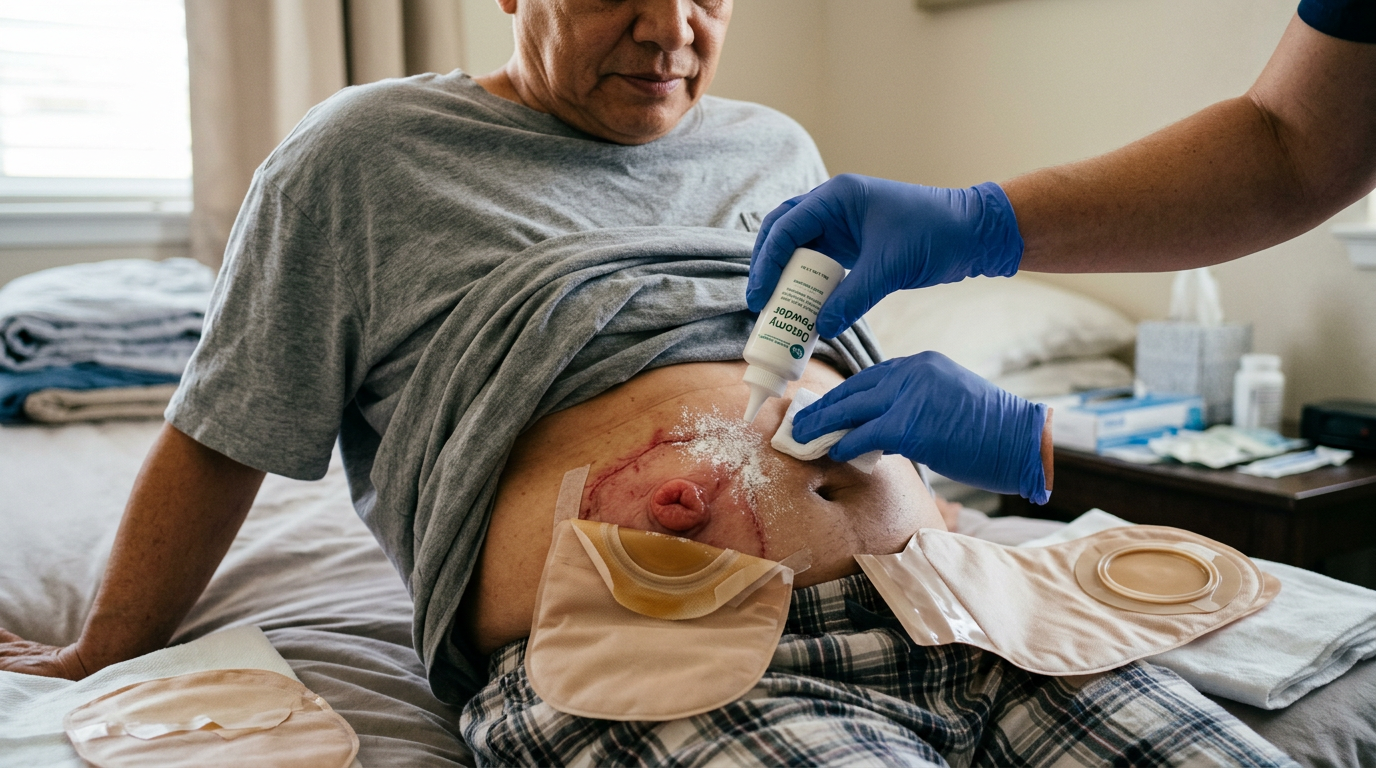
When most nurses hear the words “ostomy powder,” they immediately think of colostomies or ileostomies. But if you’ve been in home health for a while, you’ve probably discovered that this little bottle has become one of your favorite wound care supplies—even for patients who don’t have an ostomy.
I’ve used ostomy powder countless times to help protect fragile skin around wounds, especially when I’m fighting to get a wound vac to seal. If you’ve ever spent 30 minutes chasing an air leak because the surrounding skin was weepy or moist, you already know why this product deserves a spot in your nursing bag.
- What Is Ostomy Powder?
- When Can You Use Ostomy Powder?
- How to Apply Ostomy Powder Correctly
- The “Crusting Technique”
- Ostomy Powder and Wound Vacs
- Common Mistakes
- Using too much powder
- Applying it to dry, healthy skin
- Forgetting to remove the excess
- Ignoring the cause of the moisture
What Is Ostomy Powder?
Ostomy powder is a skin protectant made to absorb excess moisture from damaged or weepy skin. Although it was originally designed to protect the skin around an ostomy, home health nurses commonly use it to help manage moisture-associated skin damage (MASD) and protect the periwound before applying certain dressings.
Think of it as a way to create a healthier surface for dressings to stick to while protecting fragile skin from further breakdown.
When Can You Use Ostomy Powder?
You may see ostomy powder used on:
- Weepy periwound skin
- Moisture-associated skin damage (MASD)
- Peristomal skin irritation
- Skin damaged by wound drainage
- Mildly macerated skin
- Skin folds affected by excess moisture
- Areas where a wound vac drape isn’t sticking because the skin is too moist
One of the biggest advantages is that it helps absorb moisture without adding more moisture to the skin.
How to Apply Ostomy Powder Correctly
A little goes a long way.
- Clean and dry the skin.
- Lightly dust a very thin layer of ostomy powder over the moist or irritated skin.
- Gently brush or wipe away the excess powder. Only a thin coating should remain.
- If ordered or appropriate, seal the powder with a no-sting skin barrier wipe or spray using the “crusting” technique.
- Allow it to dry completely before applying your dressing or wound vac drape.
The goal isn’t to cake the skin with powder. Too much powder can actually make it harder for dressings and adhesives to stick.
The “Crusting Technique”
If you’ve been in home health long enough, you’ve probably heard another nurse say, “Let’s crust it.”
The crusting technique involves:
- Applying a light layer of ostomy powder.
- Removing the excess.
- Dabbing a no-sting skin barrier over the powder.
- Letting it dry.
- Repeating if needed.
This creates a thin protective layer over damaged skin while still allowing dressings to adhere.
Ostomy Powder and Wound Vacs
This is where ostomy powder really shines.
If the periwound is moist or weeping, your wound vac drape may refuse to stick. You can smooth the drape down perfectly, only to hear the dreaded hissing alarm a few minutes later.
A properly applied layer of ostomy powder can help:
- Absorb excess moisture
- Protect fragile periwound skin
- Reduce maceration
- Improve drape adhesion (when used appropriately)
It isn’t a substitute for good wound vac technique, but it can make a frustrating dressing change much easier.
Common Mistakes
Using too much powder
More isn’t better. Thick layers prevent dressings from adhering properly.
Applying it to dry, healthy skin
Ostomy powder is designed for moist or irritated skin. If the surrounding skin is healthy and dry, it usually isn’t necessary.
Forgetting to remove the excess
Always brush away extra powder before applying a skin barrier or dressing.
Ignoring the cause of the moisture
If the periwound is constantly wet, ask why.
Is there:
- Heavy wound drainage?
- Incontinence?
- A leaking dressing?
- Excess perspiration?
- Poor dressing selection?
Treating the underlying problem is just as important as protecting the skin.
Home Health Pearl 💡
One of the biggest lessons I’ve learned in home health is that healthy periwound skin is just as important as the wound itself. You can choose the perfect dressing, but if the surrounding skin is constantly breaking down, your wound is going to have a much harder time healing.
Sometimes the difference between a wound vac that seals in five minutes and one that takes half an hour is simply taking a few extra minutes to protect the periwound first.
Frequently Asked Questions
Can you put ostomy powder directly into a wound?
No. Ostomy powder is intended for the skin around the wound, not the wound bed itself, unless specifically directed by the wound care provider or manufacturer.
Does ostomy powder help a wound vac stick?
It can help when the surrounding skin is moist or weeping, especially when used with the crusting technique. However, too much powder can have the opposite effect and prevent the adhesive drape from sealing.
Can you use ostomy powder on macerated skin?
Yes. Ostomy powder is commonly used to help absorb moisture and protect mildly macerated or irritated skin around a wound.
Can you use ostomy powder with a no-sting barrier wipe?
Yes. In fact, combining the two products is known as the crusting technique, which is commonly used to protect damaged periwound or peristomal skin while improving dressing adhesion.
Final Thoughts
Home health nursing is full of little tricks that aren’t always covered during orientation. Ostomy powder is one of those products that seems simple, but once you learn how and when to use it correctly, it can save you time, protect your patient’s skin, and make difficult dressing changes much less frustrating.
Sometimes it’s the smallest supplies in your nursing bag that end up making the biggest difference.