
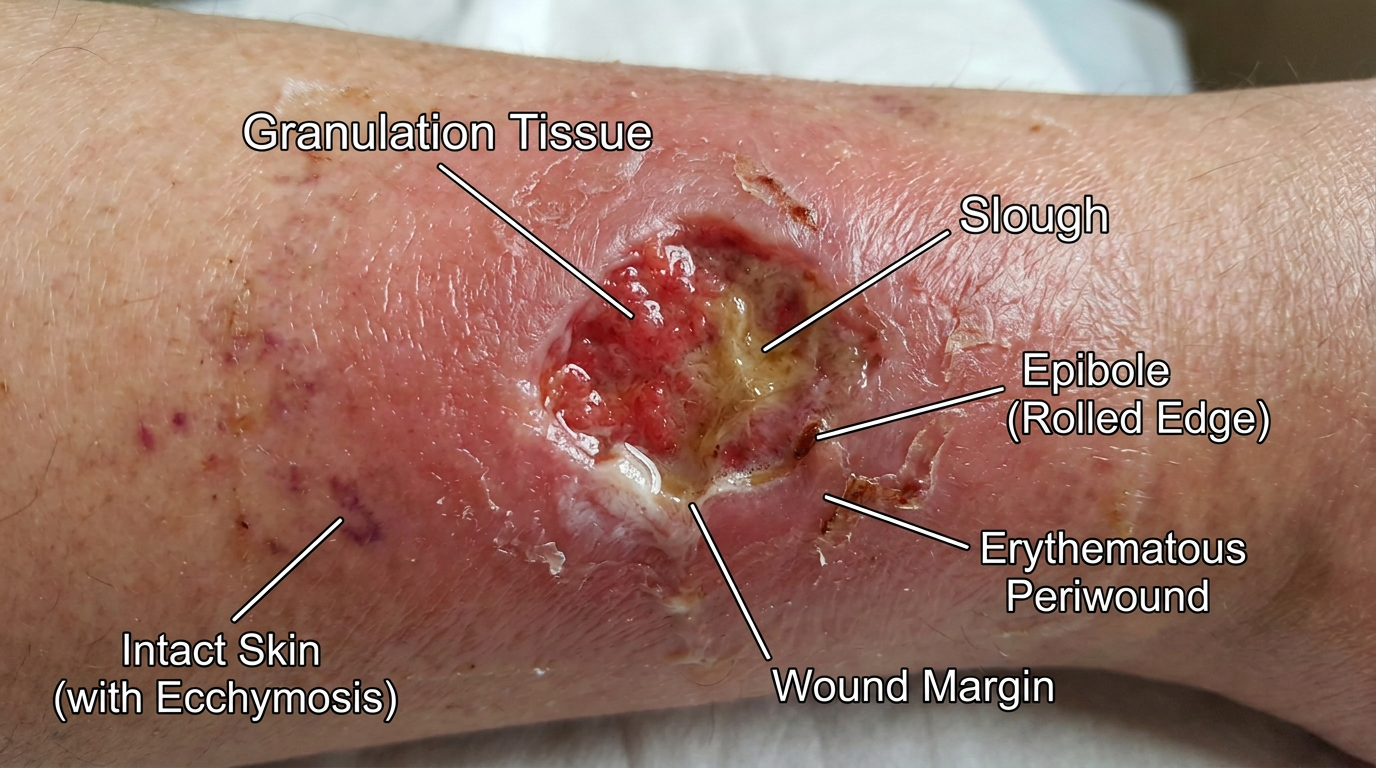
If you notice the periwound is always wet, don’t just keep replacing the dressing—figure out why it’s happening. Treating the cause is just as important as treating the wound itself.
- Heavy Wound Drainage
- Incontinence
- A Leaking Dressing
- Excess Perspiration
- Poor Dressing Selection
- How Can Ostomy Powder Help?
Heavy Wound Drainage
If the wound is producing a lot of drainage, the dressing may not be absorbing enough fluid. Consider whether a more absorbent dressing, such as a calcium alginate, hydrofiber, or foam dressing, may be more appropriate (per provider orders). If the dressing is becoming saturated before the next scheduled change, the patient may also need more frequent dressing changes.
Incontinence
Urine and stool can quickly break down the skin around a wound. Keep the area clean and dry, apply a moisture barrier cream to intact skin when appropriate, and address the incontinence with scheduled toileting, absorbent products, or other interventions. If the periwound is already moist and irritated, a light dusting of ostomy powder can help absorb moisture and protect the skin.
A Leaking Dressing
A dressing that isn’t sealed properly allows wound drainage to spread onto the surrounding skin, increasing the risk of maceration. Make sure the dressing is applied correctly, reinforce loose edges if needed, and change the dressing if the seal has been compromised. With wound vacs, always troubleshoot air leaks before leaving the patient’s home.
Excess Perspiration
Patients who perspire heavily or have skin folds may develop constant moisture around the wound. Gently cleanse and dry the skin, keep the area as dry as possible, and consider using ostomy powder on moist periwound skin to absorb excess moisture before applying a skin barrier or dressing.
Poor Dressing Selection
Sometimes the wound itself isn’t the problem—the dressing is. A dressing that can’t handle the amount of drainage will leave the surrounding skin wet and increase the risk of skin breakdown. If you notice repeated maceration, reassess whether the current dressing is still the best choice and notify the provider if a different dressing may be more appropriate.
How Can Ostomy Powder Help?

Ostomy powder isn’t meant to heal the wound itself—it’s there to help protect the periwound. When the surrounding skin becomes moist, weepy, or mildly macerated, a light dusting of ostomy powder can absorb excess moisture and create a healthier surface for dressings to adhere.
When used correctly, ostomy powder can:
- Absorb excess moisture from the periwound
- Help reduce maceration
- Protect fragile skin from further breakdown
- Improve dressing and wound vac drape adhesion
- Increase patient comfort by reducing skin irritation
Remember, less is more. Apply only a thin layer, gently brush away the excess, and if appropriate, use the crusting technique with a no-sting skin barrier. Too much powder can actually prevent dressings or wound vac drapes from sticking properly.