
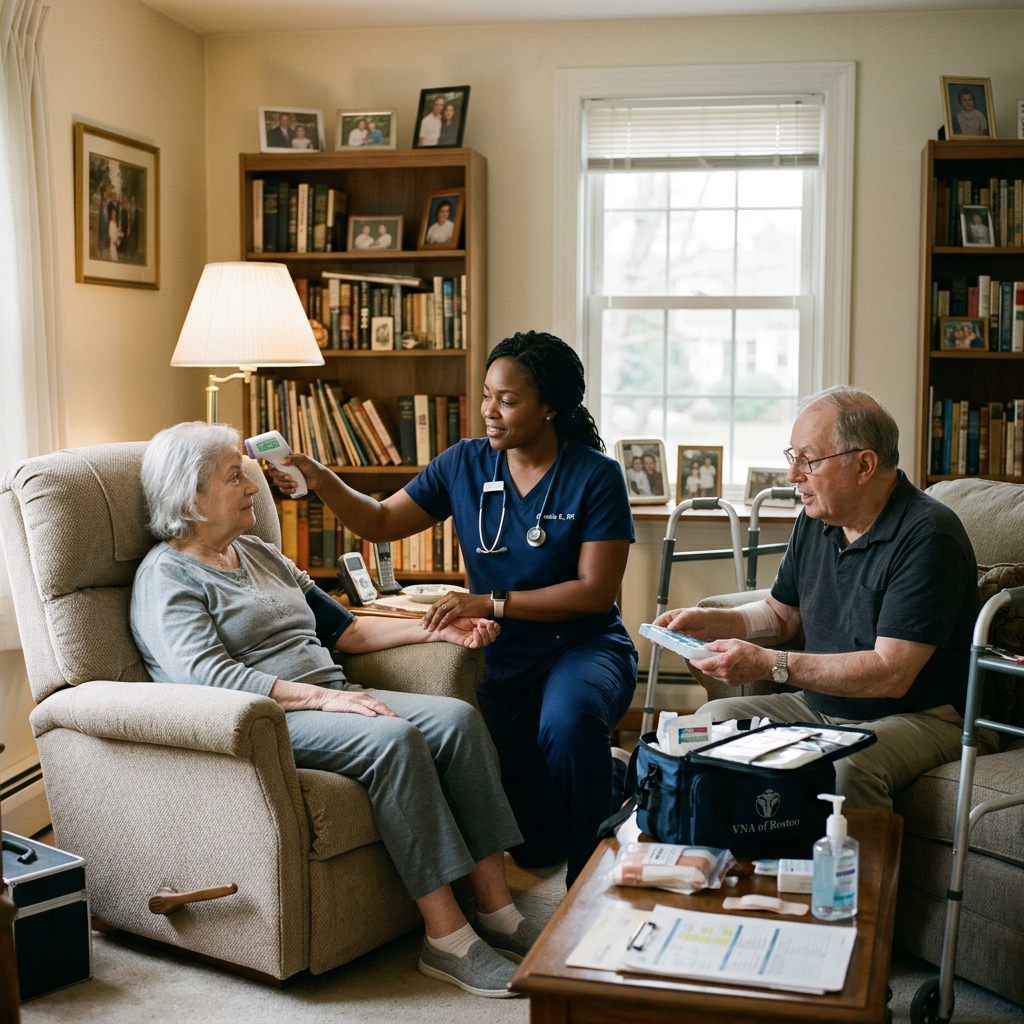
When I first started home health, I thought I would mostly be checking blood pressures, giving medications, and doing a little wound care.
I was very wrong.
Home health nurses end up learning a little bit of everything. Every patient is different, and every day brings something new. One house might have a simple medication visit, while the next has a wound vac, a PICC line, a feeding tube, and a Foley catheter all at the same time.
Here are some of the skills you’ll see most often in home health:
- Wound Care
- IV Therapy & Vascular Access
- Infusion & Specialty Treatments
- Foley & Suprapubic Catheters
- Feeding Tubes
- Drains
- Ostomy Care
- Respiratory Care
- Cardiac Care
- Diabetes Management
- Medication Management
- Assessment
- Patient Teaching
- When in doubt …
- Why You Won’t Know Everything
Wound Care
Wound care is probably one of the biggest parts of home health nursing. You’ll see all kinds of wounds, and every one is a little different.
Some of the most common include:
- Pressure injuries (Stages 1–4, unstageable, and deep tissue pressure injuries)
- Surgical wounds
- Skin tears
- Venous leg ulcers
- Arterial ulcers
- Diabetic foot ulcers
You’ll also learn how to:
- Stage pressure injuries correctly
- Choose the right dressing for each wound
- Apply dressings using clean or sterile technique, depending on the order
- Use negative pressure wound therapy (wound vacs)
- Remove staples and sutures when ordered
- Apply compression wraps when appropriate
- Monitor wounds after debridement
- Assess the surrounding skin (periwound)
- Recognize signs of infection and delayed healing
- Teach patients and caregivers how to care for wounds at home
Don’t worry if you don’t know every dressing when you first start. I remember looking at the supply bag thinking, “How am I supposed to know which one goes where?” Over time, you’ll learn what products work best for different wounds, and it starts to become second nature. frustrating skills to learn, but once you get comfortable with it, it becomes much less intimidating.
IV Therapy & Vascular Access
Many home health patients receive IV antibiotics or hydration at home. You’ll learn how to care for PICC lines, midlines, and implanted ports.
Common visits include:
- PICC line dressing changes
- Midline catheter care
- Central venous catheter (CVC) care
- Port-a-cath access/de-access
- Peripheral IV insertion (agency dependent)
- Blood draws via PICC, port, or venipuncture
- IV antibiotic administration
- IV hydration
- IV push medications
- Elastomeric (EasyPump) infusion management
- CADD pump management
- TPN administration
- Lipid infusions
Infusion & Specialty Treatments
Some home health agencies care for patients with more specialized needs.
Depending on your agency, you may learn:
- IVIG (immunoglobulin) administration
- Biologic injections
- Hydration therapy
- Injectable specialty medications
- Chemotherapy support
- Teaching patients about specialty medications
Don’t worry if you’ve never done some of these before. Every experienced home health nurse had to learn them for the first time.
Foley & Suprapubic Catheters
Catheter care is another skill you’ll use often in home health. It might seem intimidating at first, but after you’ve done a few, it becomes part of your routine.
Some of the skills you’ll learn include:
- Foley catheter insertion and replacement
- Foley catheter maintenance and routine care
- Suprapubic catheter changes and care
- Catheter irrigation (when ordered)
- Assessing for urinary retention and catheter problems
- Teaching patients and caregivers how to help prevent catheter-associated urinary tract infections (CAUTIs)
You’ll also spend a lot of time troubleshooting things like poor drainage, leaking catheters, sediment, kinks in the tubing, and making sure everything is secured properly. A big part of our job is teaching patients and caregivers how to keep the catheter clean, recognize signs of infection, and know when it’s time to call the nurse or doctor.
Feeding Tubes
Many patients receive their nutrition through a PEG tube, G-tube, or J-tube.
Feeding tubes are another skill you’ll come across fairly often in home health. At first they can seem intimidating, but after a few visits, you’ll realize they’re just another part of the job.
Some of the skills you’ll learn include:
- PEG tube care
- G-tube care
- J-tube care
- NG tube assessment (less common in home health)
- Tube feeding administration
- Troubleshooting feeding pumps
- Teaching caregivers how to give bolus feedings
- Administering medications through a feeding tube
You’ll spend a lot of time teaching patients and caregivers how to safely give feedings, flush the tube before and after medications, keep the insertion site clean, and recognize signs that something isn’t right. You’ll also learn how to troubleshoot common problems like clogged tubes, leaking around the insertion site, feeding pump alarms, and accidental tube dislodgement.
Like everything else in home health, it can feel overwhelming the first few times. But once you’ve worked with a few patients, feeding tubes become much less intimidating than they first seem.
Drains
Home health nurses see several different types of drains.
Some of the most common are:
- PleurX drain management
- Jackson-Pratt (JP) drain care
- Hemovac drain care
- Penrose drain assessment
- Biliary drain care
- Nephrostomy tube care
- Percutaneous abscess drain care
- Chest tube assessment (when appropriate in home care
Each one has its own routine, but after you’ve done a few, they become much less scary.
Ostomy Care
Ostomies can seem overwhelming at first, but you’ll gain confidence with practice.
You’ll learn how to change ostomy appliances, protect the surrounding skin, use ostomy powder and barrier products, and help patients feel more comfortable managing their ostomy at home.
Respiratory Care
Home health nurses care for many patients with chronic lung disease, especially COPD. Respiratory visits are about much more than checking an oxygen level.
Some of the skills you’ll use include:
- Oxygen therapy
- Nebulizer treatments
- Tracheostomy care
- Tracheostomy suctioning
- Pulse oximetry monitoring
- COPD education
- Incentive spirometer teaching
- CPAP and BiPAP education
A lot of respiratory care is teaching patients how to recognize when their breathing is getting worse before it turns into an emergency.
Cardiac Care
Heart failure and high blood pressure are some of the most common diagnoses we see in home health.
You’ll learn how to:
- Monitor patients with congestive heart failure (CHF)
- Teach daily weight monitoring
- Check and monitor blood pressure
- Assess swelling (edema)
- Educate patients taking blood thinners
- Assess pacemaker incisions
- Teach cardiac medications and why they’re important
Many cardiac visits are about catching small changes before they become big problems.
Diabetes Management
You’ll probably see diabetes almost every day in home health.
Some common skills include:
- Blood glucose monitoring
- Insulin administration
- Continuous Glucose Monitor (CGM) education
- Recognizing and managing high and low blood sugar
- Diabetic foot assessments
- Nutrition and diet education
Teaching is a huge part of diabetes management. Sometimes a few simple changes can help patients avoid another trip to the hospital.
Medication Management
Home health nurses spend a surprising amount of time working with medications.
Some of the skills you’ll develop include:
- Medication reconciliation
- Organizing pill boxes
- Teaching high-risk medications
- Giving injections
- Assessing medication compliance
- Watching for medication interactions (polypharmacy)
It’s amazing how often one medication change can explain why a patient suddenly isn’t feeling well.
Assessment Skills
One of the biggest parts of home health nursing is learning how to recognize when something doesn’t look right.
Every visit usually includes:
- Head-to-toe assessments
- Pain assessments
- Neurological assessments
- Fall risk assessments
- Skin assessments
- Infection assessments
- Vital signs
- Watching for medication side effects
Sometimes your assessment is what keeps a patient from ending up back in the hospital.
Patient Teaching
Honestly, this is probably the biggest skill of all.
Every visit involves teaching.
You might be explaining:
- Disease processes
- Medications
- Fall prevention
- Infection prevention
- Emergency preparedness
- Nutrition and hydration
- Home safety
- Pressure injury prevention
Sometimes you’re teaching someone how to care for a wound. Other times you’re explaining medications, diabetes, oxygen safety, heart failure, COPD, fall prevention, or when it’s time to call the doctor.
A lot of our job is helping patients feel less overwhelmed.
Don’t Be Afraid to Use YouTube
One thing that’s helped me more times than I can count is YouTube.
Sometimes reading a policy or looking at pictures just isn’t enough. Watching someone actually perform a skill can make everything click.
If I’m getting ready to see a patient with equipment I haven’t used in a while—or something completely new—I’ll often watch a few videos beforehand as a refresher. It helps me picture each step before I walk through the patient’s front door.
Just remember that every agency has its own policies, and every patient is different. Use YouTube as a learning tool, not as a replacement for your agency’s training or your doctor’s orders.
I’ve found that seeing a skill performed, then practicing it yourself, is one of the fastest ways to build confidence in home health.
You’ll Never Know Everything
One thing I’ve learned is that you don’t have to know everything before you start home health.
There will always be a dressing you’ve never seen, a drain you’ve never managed, or a medication you’ve never heard of.
The important part is being willing to learn.
Every patient teaches you something new. And before you know it, you’ll look back and realize all those things that once made you nervous have become part of your normal day.