
As a home health nurse, I’m sure you’ve come across plenty of pressure injuries. They’re probably one of the most common wounds we see in home health, especially in patients who are bedbound, use a wheelchair, or just don’t move around much.
So what exactly is a pressure injury?
A pressure injury happens when the same spot on the body has too much pressure on it for too long. Over time, that pressure cuts down the blood flow to the skin. Without enough blood, oxygen, and nutrients, the skin starts to break down. If the pressure isn’t relieved, what starts out as a small red area can eventually turn into a much deeper wound.
Who is at risk?
Patients who are most at risk are those who:
- Spend most of their day in bed
- Use a wheelchair
- Have trouble moving around by themselves
- Need help repositioning
- Have poor nutrition or poor circulation
The Four Stages of Pressure Injuries
- Stage 1: Non-blanchable redness
- Stage 2: Partial-thickness skin loss
- Stage 3: Full-thickness skin loss
- Stage 4: Severe, full-thickness wound
- Unstageable wounds
- Deep tissue injury
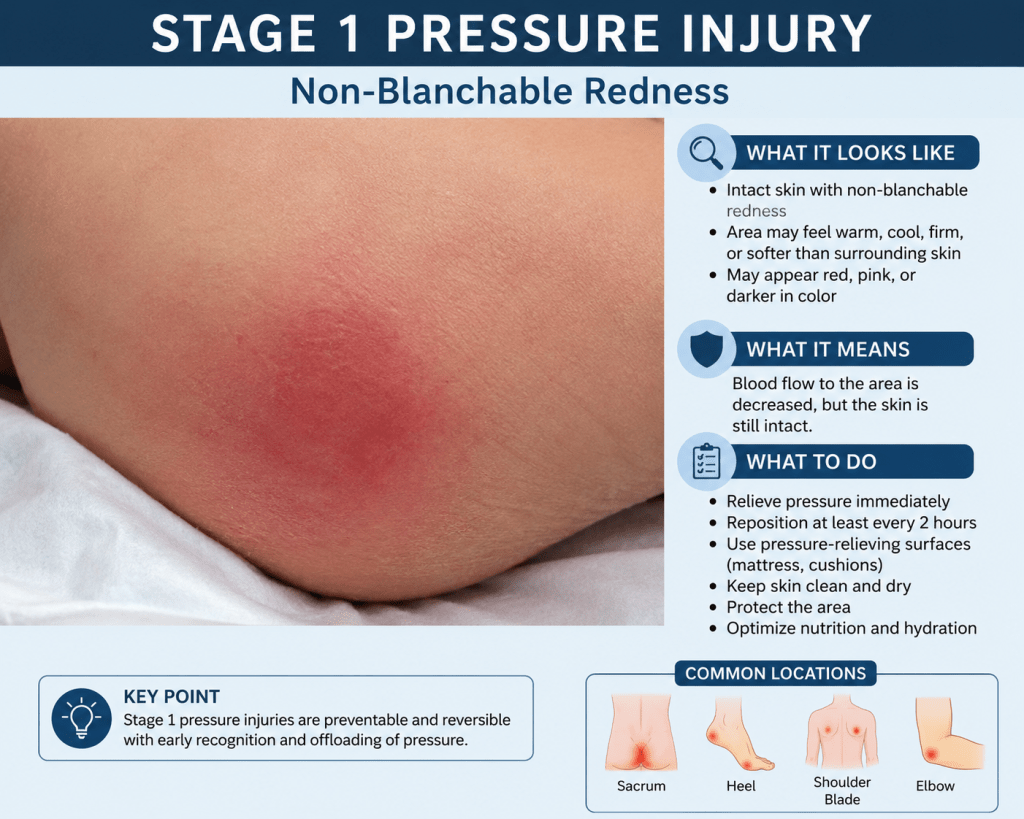
Stage 1 Pressure Injury: Non-blanchable redness
What it looks like:
- Skin is still intact
- Red, purple, or darker than surrounding skin
- May feel warm, cool, firm, or soft
- Does not turn white when pressed (non-blanchable redness)
Treatment
- Relieve pressure immediately by repositioning the patient and offloading the affected area with pillows, heel protectors, or a pressure-relieving mattress.
- Reposition bedbound patients at least every 2 hours.
- Keep the skin clean and dry, especially if the patient is incontinent or sweating excessively.
- Apply zinc oxide barrier cream to protect the skin if moisture from urine, stool, or perspiration is contributing to skin irritation or breakdown.
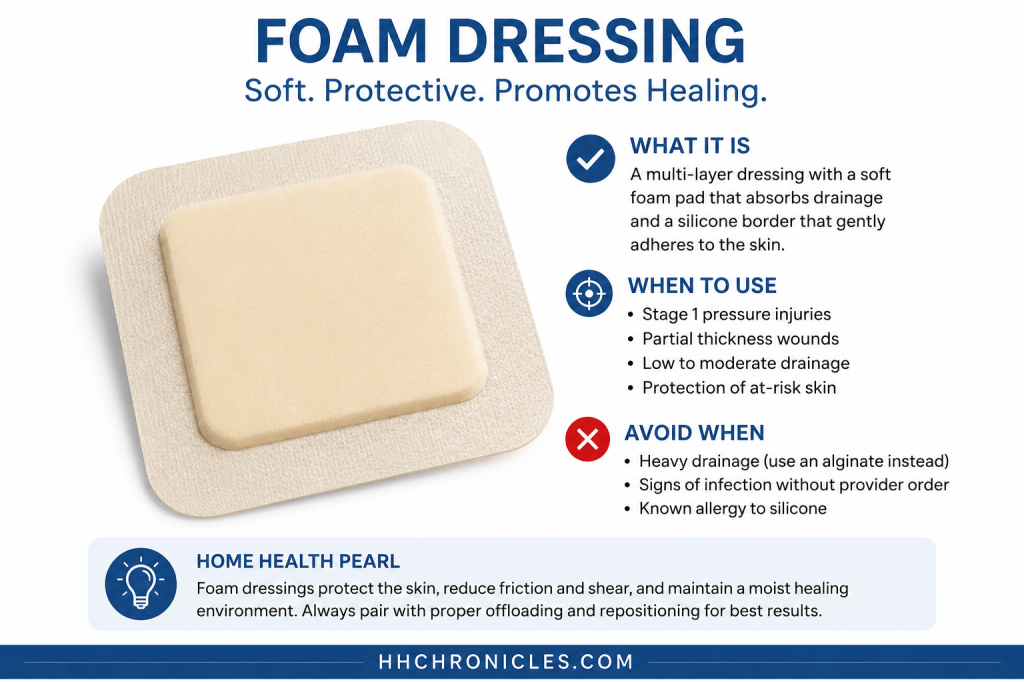
- Protect the area with a foam dressing, if appropriate and ordered, to help reduce friction and shear.
- Encourage good nutrition and hydration to support healthy skin and promote healing.
Stage 2 Pressure Injury: Partial-thickness skin loss
What it looks like:
- The top layer of skin has broken open.
- Looks like a shallow open sore, blister, or pink wound.
- Usually painful.
- No fat, muscle, or bone is visible.

Treatment
- Continue frequent repositioning.
- Clean the wound with normal saline or an approved wound cleanser.
- Maintain a moist wound-healing environment.
- Common dressings may include:
- Foam dressings
- Hydrocolloids
- Silicone dressings
- Hydrogels (if the wound is dry)
- Watch closely for signs of infection.
Stage 3 Pressure Injury: Full-thickness skin loss
What it looks like:
- Full-thickness skin loss.
- Fat may be visible.
- The wound is deeper and may have drainage.
- Tunneling or undermining may be present.
- Bone, tendon, and muscle are not visible.
Treatment
- Thorough wound assessment.
- Remove dead tissue when appropriate (per provider orders).
- Fill deep wounds with appropriate packing material if ordered.
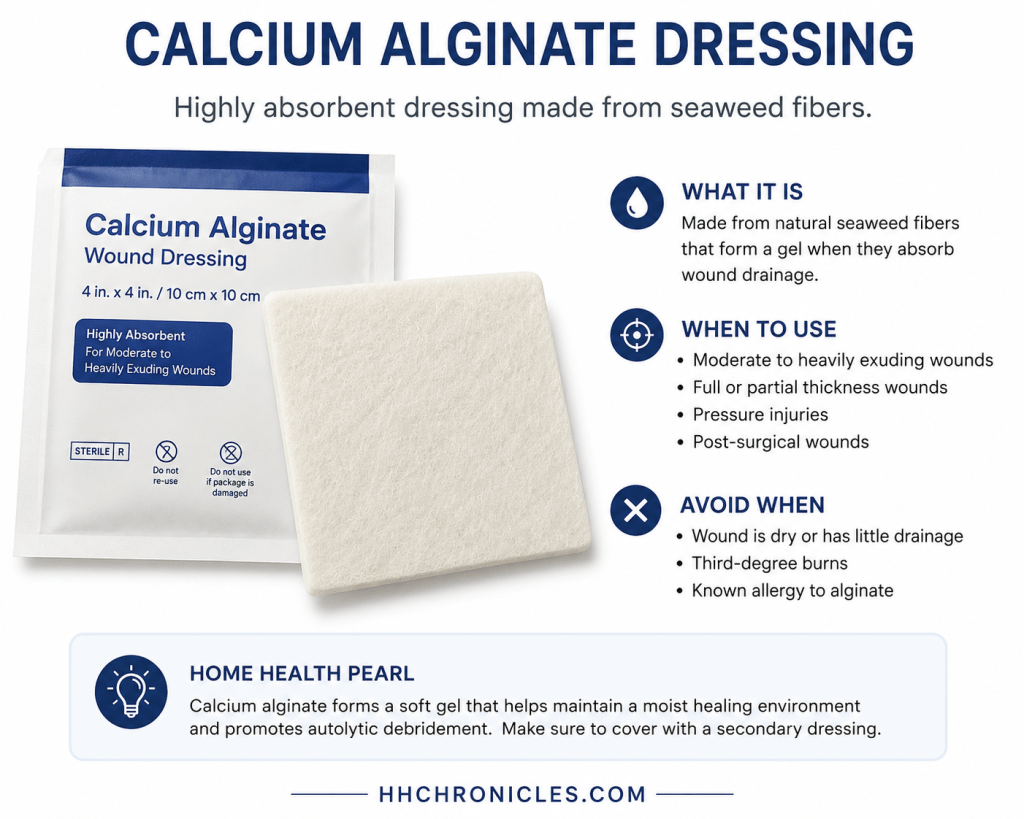
- Select dressings based on drainage:
- Calcium alginate
- Hydrofiber
- Medical-grade honey
- Collagen
- Foam dressings
- Manage moisture balance.
- Optimize nutrition, especially protein intake.
- Monitor carefully for infection.
Stage 4 Pressure Injury: severe, full-thickness wound
What it looks like:
- Very deep wound.
- Muscle, tendon, ligament, cartilage, or bone may be visible.
- Often has heavy drainage.
- May contain dead tissue (slough or eschar).
- High risk for serious infection.
Treatment
- Requires prompt medical evaluation.
- Frequent wound care and dressing changes.
- Debridement may be needed if appropriate.
- Negative Pressure Wound Therapy (wound vac) may be prescribed.
- Control infection if present.
- Aggressive pressure relief.
- Maximize nutrition and hydration.
- Ongoing monitoring by skilled wound care providers.
Other Types of Pressure Injuries
Unstageable Pressure Injury
An unstageable pressure injury is exactly what it sounds like—you can’t accurately stage it because you can’t see how deep the wound really is. That’s because the wound bed is completely covered by slough (yellow, tan, gray, green, or brown dead tissue) or eschar (black or dark brown dead tissue).
One thing I’ve learned in home health is not to guess the stage just because the wound looks severe. Until enough of that dead tissue is removed and you can actually see the wound bed, it’s considered unstageable. Once the wound is visible, the provider or wound care specialist can determine the correct stage.
Treatment
- Keep pressure off the area.
- Follow provider orders for debridement if appropriate.
- Use dressings that help remove dead tissue while protecting healthy tissue.
- Monitor closely for infection.
Deep Tissue Pressure Injury (DTPI)
A Deep Tissue Pressure Injury develops when damage begins underneath the skin before the surface breaks open. It often appears as a dark purple, maroon, or blood-filled area and may feel painful, firm, mushy, warmer, or cooler than the surrounding skin. Although the skin may still be intact, the underlying tissue has already been injured.
Treatment
- Remove pressure immediately.
- Reposition frequently.
- Closely monitor for changes, as the wound may rapidly worsen over several days.
- Protect the skin with appropriate dressings if indicated.
- Maintain good nutrition and hydration.
Don’t make assumptions!
One of the biggest mistakes new home health nurses make is choosing a dressing before identifying the type and stage of the wound. The stage tells you how deep the injury is, but it doesn’t tell you which dressing is best. Your dressing choice should also take into account drainage, infection, the condition of the surrounding (periwound) skin, and the patient’s overall health. A thorough assessment is always the first step to successful wound healing.
 Home Health Chronicles
Leave a comment