
One of the biggest challenges for a home health nurse is choosing the right dressing for a wound. Unlike the hospital, where wound care specialists may already be involved, we often walk into a patient’s home and are the first clinician to perform a thorough wound assessment. Every wound is different, and selecting the wrong dressing can delay healing or even make the wound worse.
Before you even open your wound care supplies, take the time to carefully review the patient’s history and physical (H&P), hospital discharge paperwork, and referral orders. See if the hospital, skilled nursing facility, or referring provider documented a wound diagnosis, previous treatments, or dressing recommendations. This information provides a valuable starting point, but remember that your assessment is just as important. Wounds can change quickly, and what was documented a week ago may look very different today.
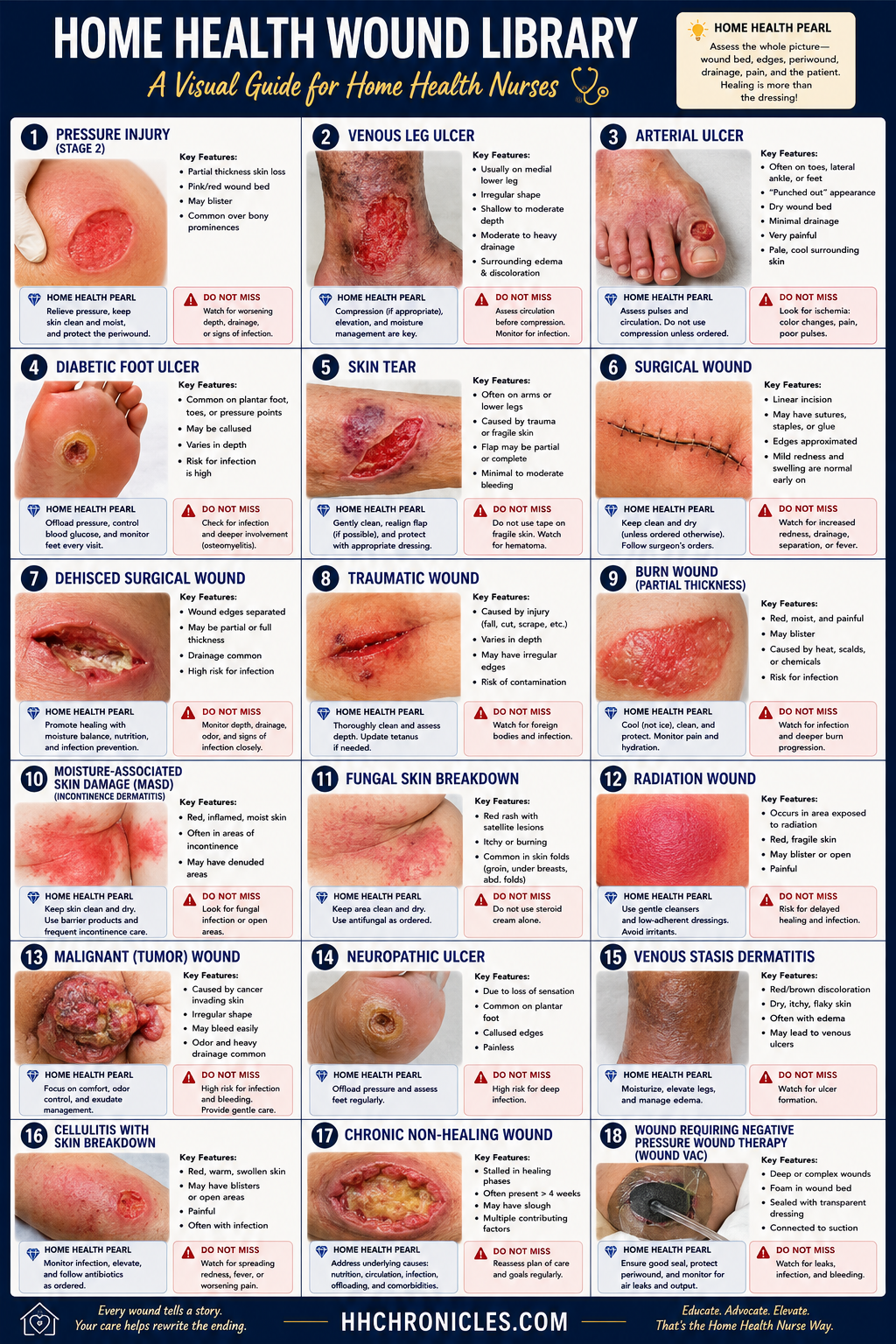
Here are some of the most common wounds you may encounter during a home health assessment.
Feel free to click on any of the links that could be helpful for your education. It will provide you with information we commonly come across in the field as well as helpful ways to treat each one:
- Pressure Injuries (Pressure Ulcers)
- Venous Leg Ulcers
- Arterial Ulcers
- Diabetic Foot Ulcers
- Skin Tears
- Surgical Wounds
- Dehisced Surgical Wounds
- Traumatic Wounds
- Burn Wounds
- Moisture-Associated Skin Damage (MASD)
- Fungal Skin Breakdown
- Radiation Wounds
- Malignant (Tumor) Wounds
- Neuropathic Ulcers
- Venous Stasis Dermatitis
- Cellulitis with Skin Breakdown
- Chronic Non-Healing Wounds
- Wounds Requiring Negative Pressure Wound Therapy (Wound Vac)
Feel free to click the following image so you may expand it for more clarity:
 Home Health Chronicles
Leave a comment